
How to Turn Your First Wooden Pen: Complete Beginner Guide
A successful first pen starts with compatible hardware, accurately prepared brass tubes, and a safely mounted blank—not with an expensive lathe.
Read the guide →Learn the craft, choose compatible tools, and make your first pen with confidence. Everything you need to get started, organized around real projects.
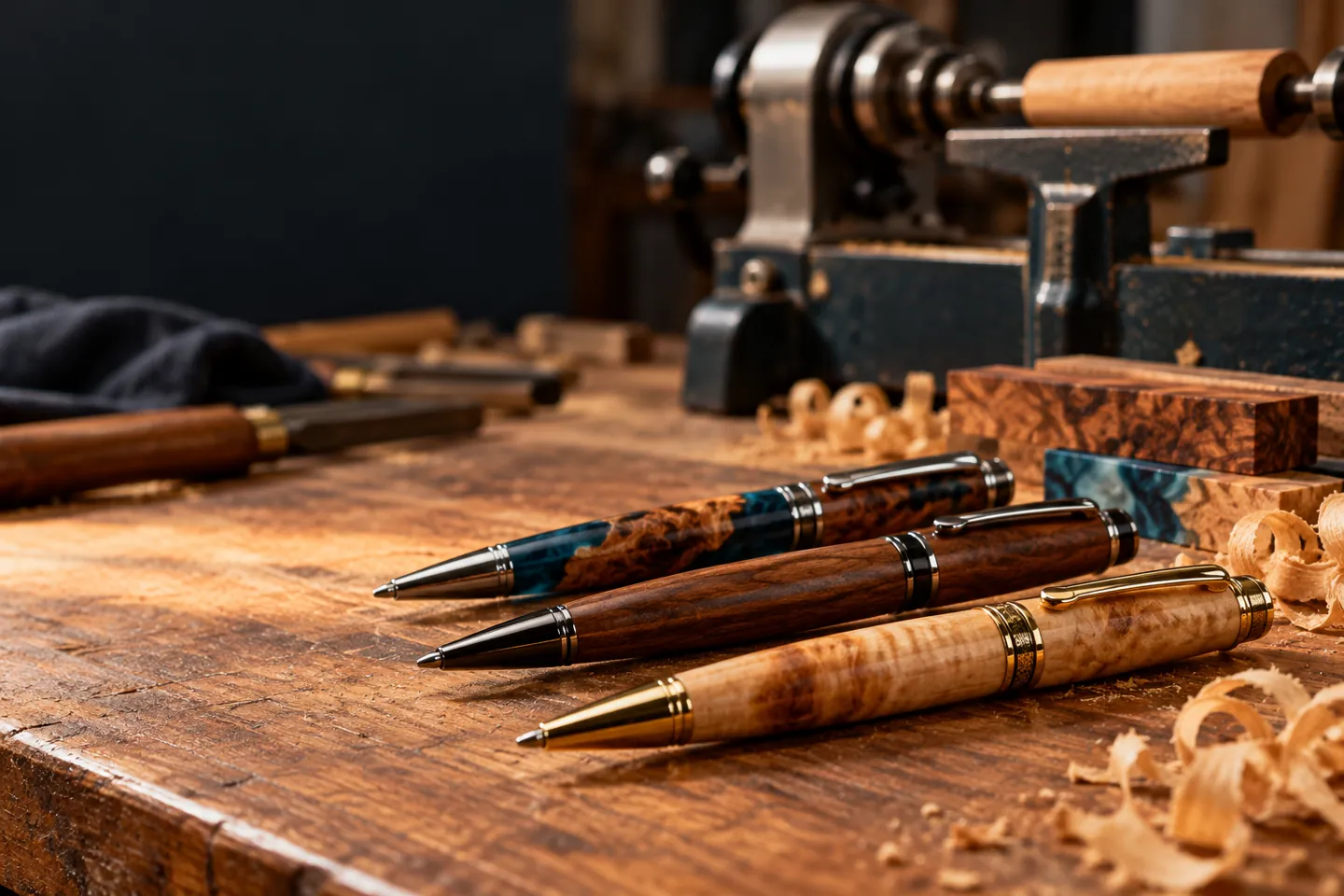
Choose a topic and find the equipment, instructions and troubleshooting that belong together.
Specific, useful answers from the core techniques to buying and compatibility decisions.
A successful first pen starts with compatible hardware, accurately prepared brass tubes, and a safely mounted blank—not with an expensive lathe.
Read the guide →A first-pen setup is less expensive when every accessory serves the exact kit you plan to turn.
Read the guide →Compare documented MT1/MT2 compatibility, speed controls, swing and working length without invented rankings or “tested” ratings.
Read the guide →The headstock and tailstock Morse taper sizes must match the accessory shank; a pen mandrel labeled MT2 does not fit an MT1 socket.
Read the guide →Slimline pens are a practical first project, but their hardware, bushings and brass tube specifications must come from the exact manufacturer kit.
Read the guide →Two common ways to hold a pen blank solve different problems; choosing between them depends on tooling, alignment and experience.
Read the guide →We use manufacturer documentation and explain important limits. Shopping links are not claims of current Amazon inventory.
A compact first lathe if you primarily expect to turn pens and small workpieces.
Specs & buying guidance →A dedicated pen-turning setup when rigidity and MT2 accessories matter.
Specs & buying guidance →An MT2 variable-speed machine for regular small-project turning.
Specs & buying guidance →Match your machine’s taper before buying. MT1 and MT2 are not interchangeable, and bushings must match the pen hardware too.